Mahua: More Than Desi Daru — A Tribal Identity India Ignores
In India’s forests, Mahua isn’t just desi daru—it’s zindagi. From early morning flower collection to rituals and rozi-roti, this forest elixir carries the identity and dignity of tribal communities. But as laws restrict it and cities rediscover it, the real question remains—who truly owns Mahua’s story?
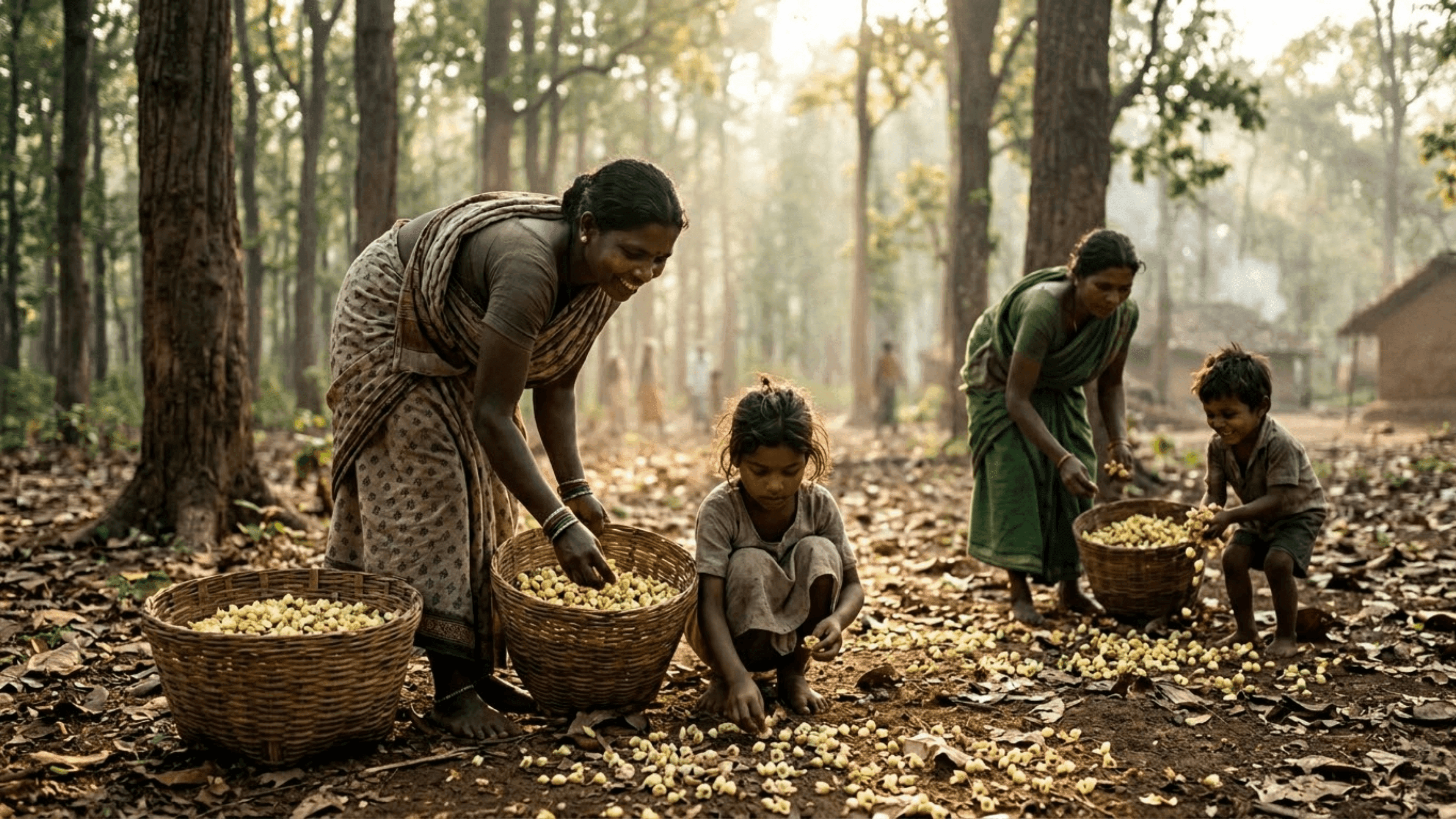
In India’s forests, this isn’t just daru… it’s parampara.
Early morning in a small gaon in Chhattisgarh. The sun hasn’t fully risen, but the jungle is already awake. Birds are calling, leaves are rustling, and beneath a tall Mahua tree, women and children quietly gather fallen flowers. There’s no rush, no noise—just a rhythm they’ve known for generations.
The air smells slightly sweet, mixed with damp mitti. A woman folds her anchal, fills it with Mahua flowers, and says softly,
“Isse hi toh ghar chalta hai.”
For them, this isn’t just a seasonal activity. This is zindagi.
What is Mahua
You won’t find Mahua explained properly in textbooks. But travel through parts of Madhya Pradesh, Jharkhand, or Chhattisgarh, and you’ll see it everywhere—on the ground, in homes, in stories.
Mahua is a tree. But more than that, it’s a lifeline.
During its flowering season, the forest floor gets covered with small, pale-yellow flowers. Families wake up before sunrise to collect them, because once the sun gets harsh, the flowers start losing their quality.
These flowers are dried, stored, sold in local bazaar, or used at home.
In many villages, Mahua is as common as wheat or rice. It doesn’t come from fields, it comes from the jungle—and that makes it even more valuable.
Cultural Importance
Mahua is not just about earning money. It’s deeply tied to rituals, celebrations, and everyday dignity.
In tribal communities, no wedding or festival feels complete without Mahua. It’s offered to ancestors, shared during gatherings, and used in moments of both joy and grief.
An elder in a Jharkhand village once said,
“Mahua humare liye bas peene ki cheez nahi hai… yeh hamari pehchaan hai.”
For many families, especially women, Mahua is also financial independence. Selling dried flowers or homemade brew brings cash without depending on outsiders.
Another woman, while sorting flowers, casually mentioned,
“Sarkari naukri toh sabko nahi milti… Mahua hai na.”
There’s pride in that sentence. A quiet confidence.
Mahua Drink (Not Just Alcohol)
Yes, Mahua is used to make what many call desi daru. But reducing it to just alcohol misses the entire story.
The process itself is simple, almost organic.
The flowers are sun-dried for days. Then they’re soaked, allowed to ferment naturally, and later distilled using basic setups—often in backyards or near the forest edge.
No chemicals. No factories. Just time, patience, and inherited knowledge.
The result is a drink that carries the smell of the forest and the warmth of community.
People don’t just drink Mahua. They sit together, share stories, laugh, and remember.
It’s less about intoxication, more about connection.
In many ways, Mahua is like a social glue—it brings people together.
Tension / Conflict
But step outside the village, and the story changes.
Mahua suddenly becomes “illegal”.
Strict laws around alcohol production often don’t differentiate between large-scale illegal liquor and traditional tribal brewing. For authorities, it’s all the same.
For locals, it feels unfair.
How does something so rooted in parampara become a problem overnight?
Many families continue making Mahua quietly, always with a sense of fear. Raids happen. Supplies get destroyed. Livelihoods vanish in a moment.
At the same time, younger generations are slowly drifting away. Some feel ashamed, some move to cities, and some just don’t see a future in it.
With every passing year, a little bit of that traditional knowledge fades.
And that loss isn’t just economic—it’s cultural.
Modern Revival (Irony + Hope)
Here’s where the story takes an interesting turn.
While villages struggle to preserve Mahua, cities have started “discovering” it.
Startups are branding Mahua as an “exotic tribal spirit.” Bottles are designed with premium labels. Prices go up. Suddenly, it’s no longer desi daru—it’s a craft beverage.
Urban consumers are curious. Some even call it India’s answer to tequila or sake.
The irony is hard to ignore.
Ignored in villages, celebrated in cities.
But this shift also brings a bit of hope.
If done right, it can give tribal communities recognition and better income. If done wrong, it can erase them from their own story.
Because Mahua without its people is just another product.
Closing
Back in the forest, under that same tree, the routine continues.
Flowers fall. Hands gather them. Life moves quietly.
No headlines. No debates. Just survival, dignity, and a deep connection to the land.
Mahua doesn’t shout its importance. It lives it—every single day.
Maybe that’s why it’s misunderstood.
Because in a world chasing speed and scale, Mahua still belongs to the slow rhythm of the jungle.
And perhaps the real question is not whether Mahua is legal or illegal…
But whether we’re ready to understand a parampara that doesn’t fit into our modern boxes.
## In India’s forests, this isn’t just daru… it’s parampara.
Early morning in a small gaon in Chhattisgarh. The sun hasn’t fully risen, but the jungle is already awake. Birds are calling, leaves are rustling, and beneath a tall Mahua tree, women and children quietly gather fallen flowers. There’s no rush, no noise—just a rhythm they’ve known for generations.
The air smells slightly sweet, mixed with damp mitti. A woman folds her anchal, fills it with Mahua flowers, and says softly, **“Isse hi toh ghar chalta hai.”**
For them, this isn’t just a seasonal activity. This is zindagi.
---
## What is Mahua
You won’t find Mahua explained properly in textbooks. But travel through parts of Madhya Pradesh, Jharkhand, or Chhattisgarh, and you’ll see it everywhere—on the ground, in homes, in stories.
Mahua is a tree. But more than that, it’s a lifeline.
During its flowering season, the forest floor gets covered with small, pale-yellow flowers. Families wake up before sunrise to collect them, because once the sun gets harsh, the flowers start losing their quality.
These flowers are dried, stored, sold in local bazaar, or used at home.
In many villages, Mahua is as common as wheat or rice. It doesn’t come from fields, it comes from the jungle—and that makes it even more valuable.
---
## Cultural Importance
Mahua is not just about earning money. It’s deeply tied to rituals, celebrations, and everyday dignity.
In tribal communities, no wedding or festival feels complete without Mahua. It’s offered to ancestors, shared during gatherings, and used in moments of both joy and grief.
An elder in a Jharkhand village once said, **“Mahua humare liye bas peene ki cheez nahi hai… yeh hamari pehchaan hai.”**
For many families, especially women, Mahua is also financial independence. Selling dried flowers or homemade brew brings cash without depending on outsiders.
Another woman, while sorting flowers, casually mentioned, **“Sarkari naukri toh sabko nahi milti… Mahua hai na.”**
There’s pride in that sentence. A quiet confidence.
---
## Mahua Drink (Not Just Alcohol)
Yes, Mahua is used to make what many call desi daru. But reducing it to just alcohol misses the entire story.
The process itself is simple, almost organic.
The flowers are sun-dried for days. Then they’re soaked, allowed to ferment naturally, and later distilled using basic setups—often in backyards or near the forest edge.
No chemicals. No factories. Just time, patience, and inherited knowledge.
The result is a drink that carries the smell of the forest and the warmth of community.
People don’t just drink Mahua. They sit together, share stories, laugh, and remember.
It’s less about intoxication, more about connection.
In many ways, Mahua is like a social glue—it brings people together.
---
## Tension / Conflict
But step outside the village, and the story changes.
Mahua suddenly becomes “illegal”.
Strict laws around alcohol production often don’t differentiate between large-scale illegal liquor and traditional tribal brewing. For authorities, it’s all the same.
For locals, it feels unfair.
**How does something so rooted in parampara become a problem overnight?**
Many families continue making Mahua quietly, always with a sense of fear. Raids happen. Supplies get destroyed. Livelihoods vanish in a moment.
At the same time, younger generations are slowly drifting away. Some feel ashamed, some move to cities, and some just don’t see a future in it.
With every passing year, a little bit of that traditional knowledge fades.
And that loss isn’t just economic—it’s cultural.
---
## Modern Revival (Irony + Hope)
Here’s where the story takes an interesting turn.
While villages struggle to preserve Mahua, cities have started “discovering” it.
Startups are branding Mahua as an “exotic tribal spirit.” Bottles are designed with premium labels. Prices go up. Suddenly, it’s no longer desi daru—it’s a **craft beverage**.
Urban consumers are curious. Some even call it India’s answer to tequila or sake.
The irony is hard to ignore.
**Ignored in villages, celebrated in cities.**
But this shift also brings a bit of hope.
If done right, it can give tribal communities recognition and better income. If done wrong, it can erase them from their own story.
Because Mahua without its people is just another product.
---
## Closing
Back in the forest, under that same tree, the routine continues.
Flowers fall. Hands gather them. Life moves quietly.
No headlines. No debates. Just survival, dignity, and a deep connection to the land.
Mahua doesn’t shout its importance. It lives it—every single day.
Maybe that’s why it’s misunderstood.
Because in a world chasing speed and scale, Mahua still belongs to the slow rhythm of the jungle.
And perhaps the real question is not whether Mahua is legal or illegal…
**But whether we’re ready to understand a parampara that doesn’t fit into our modern boxes.**